
Democracy and Other Things
How Far Will We Go to Preserve That Which We Claim is Ours Alone

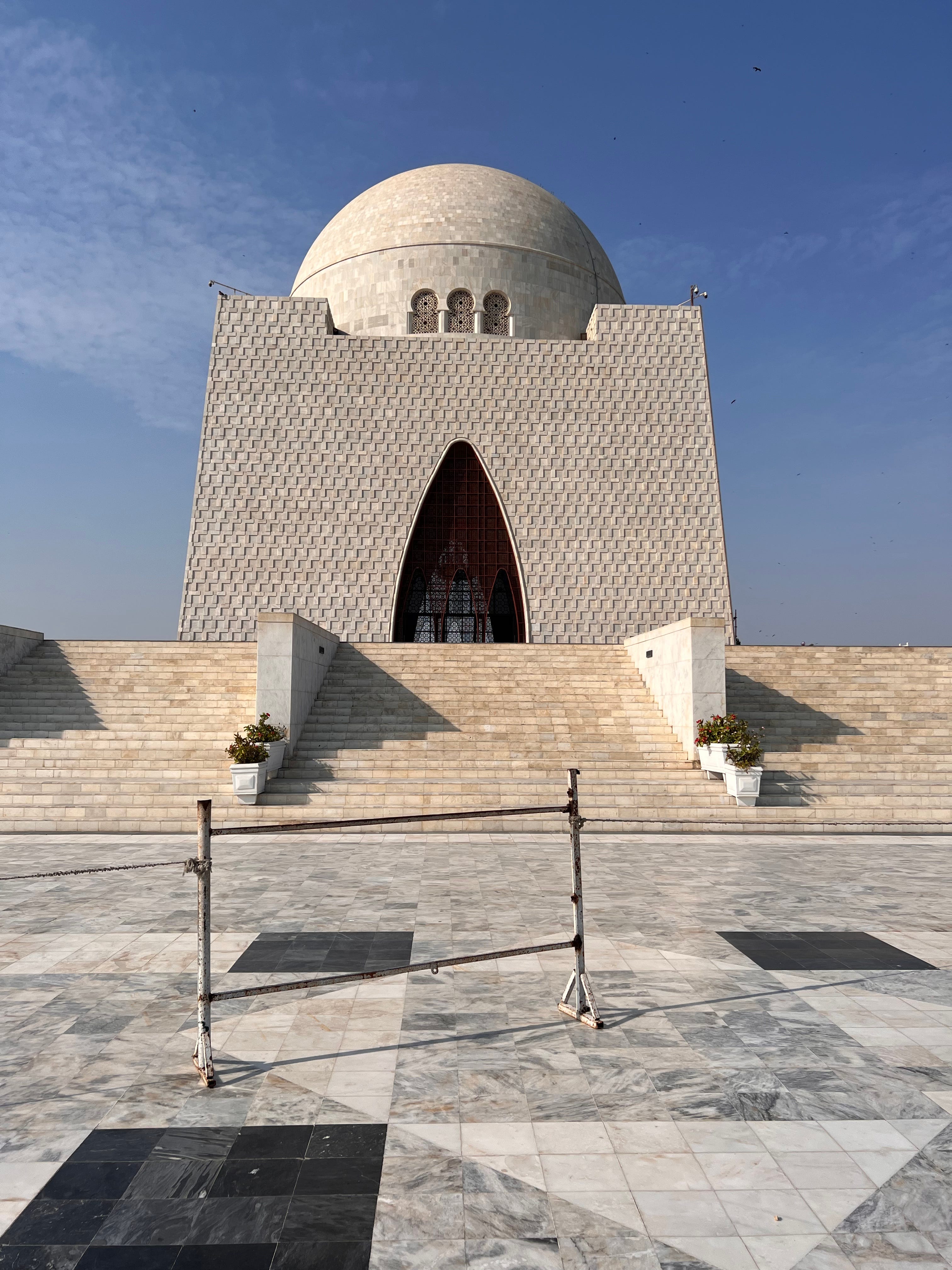
Lying in the dark of a dank hotel room in Karachi, this sprawling, chaotic, bewitching and utterly confusing city of muhajirs on the Arabian Sea, on a pilgrimage to Quaid-e-Azam Jinnah’s tomb (that great Muslim secularist), throat sore from vomiting, I realise it’s a month I haven’t written here - predominantly because of feelings of utter futility and disillusionment about the continuing atrocities being carried out across the border in the country I’ve called home for the vast majority of my adult life.
Before I travelled, I had wandered down to an Irish pub in Monot Street to watch the Six Nations. Near empty, just a handful of expats from the Emerald Isle, Mick sits drinking his beer, his once youthful face covered by a thick, ginger beard, framing a pair of sunken eyes. Feigning interest in the rugby, he looks like a shell of a human being. He’s just returned from Gaza, working in security for the UN. He has a week off before he is due to return.
Speaking to him, hearing the conditions he’s experienced there, described almost dispassionately, as if happening in another reality, an alternate universe, so close but, to steal a cliché, so far from this leafy Beirut street that I’d first visited in 2007 - where I remember drinking Kilkenny from the tap on a balmy spring evening a lifetime ago - feels visceral and shocking.
Even as Israel continues to invade Lebanese airspace on a daily basis, even as IDF attacks on the country continue to increase, and even as people grapple with the thought that only an imminent ceasefire can stop full scale regional conflict, untold death and unimaginable destruction, Beirut can still feel like a bubble. We feel the effects indirectly, knowing we are safe until the moment we are not.
Hearing Mick put that feeling into context makes my voice feel insignificant, irrelevant, illegitimate almost, at a moment in history when the voices of so many, so much more qualified than mine, are being forever silenced.
A few days later, in the bar of Aaliya’s Books I bump into George, a photojournalist and filmmaker who has worked for many years chronicling life in Gaza. An acquaintance of Yasser Arafat back in the day and a tireless advocate for the Palestinian cause, his shock of white hair matches the arak he now sips forlornly. It’s a quiet Wednesday and he looks like he’s about to burst into tears.
I ask him what’s wrong - a question which makes me feel foolish and infantile. There are no words, for the questioner or the questioned. ‘Happy are the men who yet before they are killed can let their veins run cold…[but] we wise who with a thought besmirch blood on all our souls.’
Sally walks in. She’s moved to Beirut recently from Dublin, looking for a sense of anonymity, feeling discomfort in her hometown from acolytes who do nothing to create systemic change except praise her for a bestselling book, a book detailing the lives of improvised migrants from war torn countries trying to cross the Mediterranean Sea - and the EU policies designed to stop them; policies that contravene both the moral standards that we espouse and the rule of law that we’re told we are fighting to defend.
What right is mine to share a platform with these brave? How cheap are words, especially ones for which I am not paid? Why do we write, George Orwell asked? ‘Sheer egoism. Desire to seem clever, to be talked about, to be remembered after death, to get your own back on grown-ups who snubbed you in childhood, etc., etc. It is humbug to pretend this is not a motive, and a strong one.’
But he added, ‘Political purpose – using the word ‘political’ in the widest possible sense. Desire to push the world in a certain direction, to alter other people’s idea of the kind of society that they should strive after. Once again, no book is genuinely free from political bias. The opinion that art should have nothing to do with politics is itself a political attitude.’ As Aleena, a friend and Pakistani puppeteer who has suffered so stoically for the cause once told me, ‘art is war.’
Written on a plaque next to Jinnah’s tomb is a quotation from an address he gave to the fledgling nation, just a month before he died. ‘Nature has given you everything. You have got unlimited resources. The foundations of our state have been laid and it is now for you to build and build as quickly and as well as you can. So go ahead and I wish you Godspeed.’
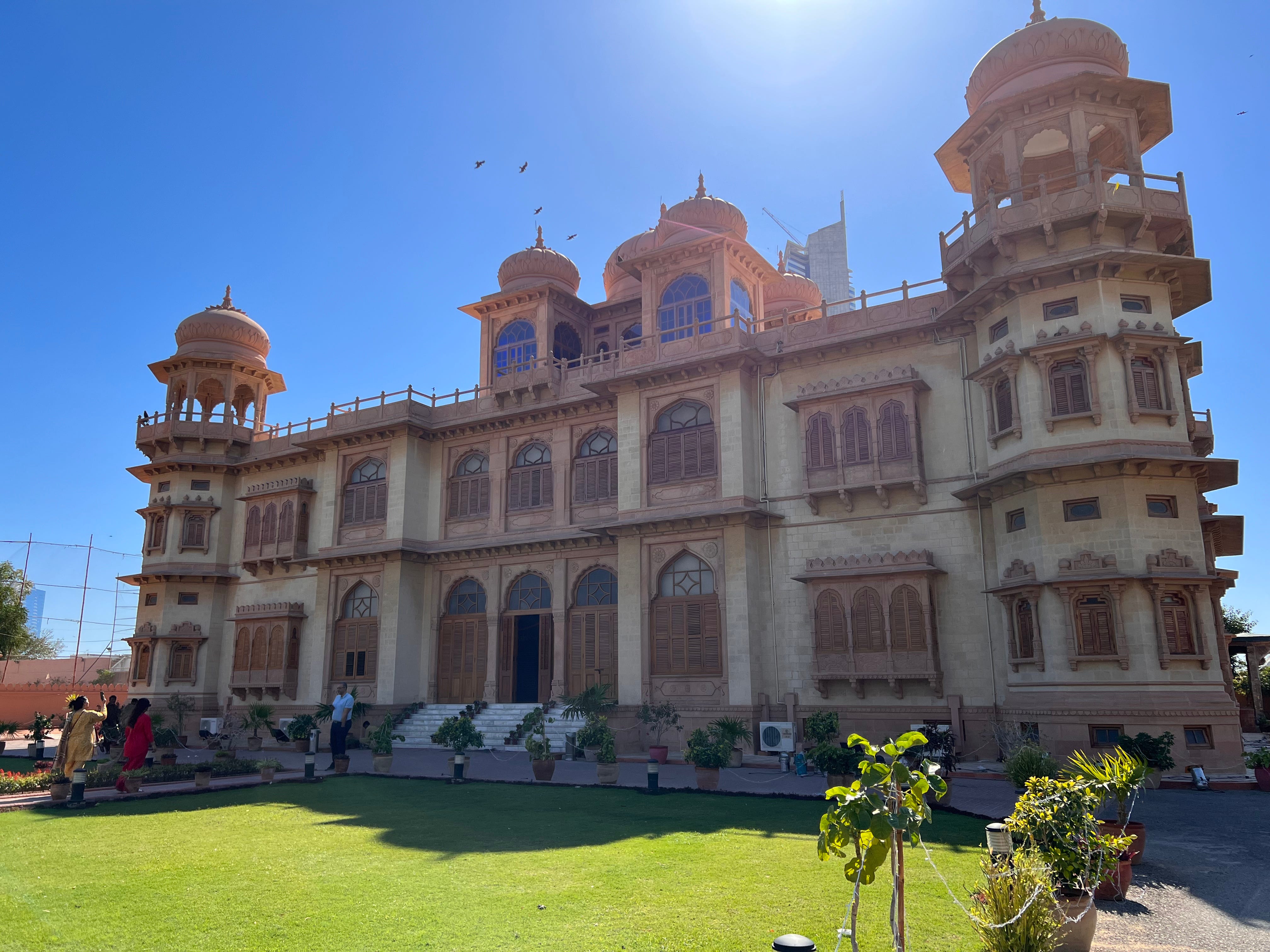
But those unlimited resources have been plundered again and again and what is left? Abject poverty and crumbling infrastructure which leaves this extraordinary city flooded, grinding to a halt, after a passing squall. Imran, perhaps the most popular grassroots politician on the planet, languishing in an Rawalpindi Jail with clear complicity from those Western champions of democracy.
80 years after Jinnah, Yuval Noah Hariri fear mongers about artificial intelligence, before retreating into 60 days of silence for his mental well-being. I feel the bile rise in my throat. To paraphrase from George Galloway, in his recent repudiation of our Prime Minister, I despise him - but not as much as I despise the emotion of despisement itself.
Are we not beyond that point? Is this stage of capitalism not a form of AI - a system that has taken on a life of its own, so complicated that those who think they understand it are, in effect, exposing themselves as not understanding it at all - a human construct that exists outside of our control and now is controlling us? How do we close Pandora’s Box? Does that mean we must not try? I can’t remember the moral of the story - perhaps there never was one.
A newspaper subheader in The Times of London tells us. ‘The Russian leader promised the use of weapons of mass destruction if he perceived a threat. But experts disagree about how far he might go.’ These are the experts with whom we are left - diametrically opposed along a binary outcome. One group couldn’t be more wrong. The other has a 50/50 chance of being right.
Aaron Bushnell self immolates himself outside the Israeli Embassy in Washington. The machine labels him as mentally unhinged and life moves on. A week later, the IDF opens fire on a ‘mob’ of starving Palestinians, queuing for flour. The soldiers in tanks, we are told, feared for their lives from this unruly horde of hungry barbarians - a word that means ‘those who speak a different language.’
Tarek El-Tayeb Mohamed Bouazizi set himself on fire and the entire Arab world was engulfed in the flames of revolutionary fervour. Eight years later I stood in Martyr’s Square with a million others. I watched in silence as they chanted in unison. ‘Kulon ya3ni kulon, as-shab yurid isqat an-nizam’ - everyone means everyone, the people demand the collapse of the system. What will it take for us, who have the power, to do the same?
I drive past a nondescript roundabout in Clifton, a bifurcated suburb of the very rich and the very poor along the sea, home to the Bhuttos and not more than a hundred metres from where Murtaza was gunned down one September evening. There another Jinnah quotation sits upon a sign. ‘Democracy is in the blood of the Muslims, who look upon complete equality of mankind, and believe in fraternity, equality and liberty.’ Does it flow in ours as well?
It’s easy, and very reasonable to feel defeated with the horror that is happening now - but that is what the powerful want. We can all speak up,in whatever small way that we can: it makes a difference, even a tiny one. All those minuscule steps add up to a stampede towards freedom. You don’t have to be George Orwell or Imran Khan, or Marwan Barghouti for your voice to matter. All my life, I have supported the Palestinian cause passionately: it’s a simple case of right and wrong. Even writing tiny little posts here on Substack has ramifications. I have, earlier today, had to block two nasty (I think) zionists who objected to my anti-occupier posts. The zionists are such delicate little flowers (!) that they are unable to tolerate any criticism at all. They are becoming rattled, because they know that their game is up. It’s clearly going to take longer to achieve effective political change, but the elite can’t keep all of us down for ever. We have to find other like-minded souls to work out the most effective ways of campaigning. In the meantime, every tiny act of solidarity or advocacy makes a difference - and those tiny differences add up to an avalanche of change. The times really are changing: we can do this!